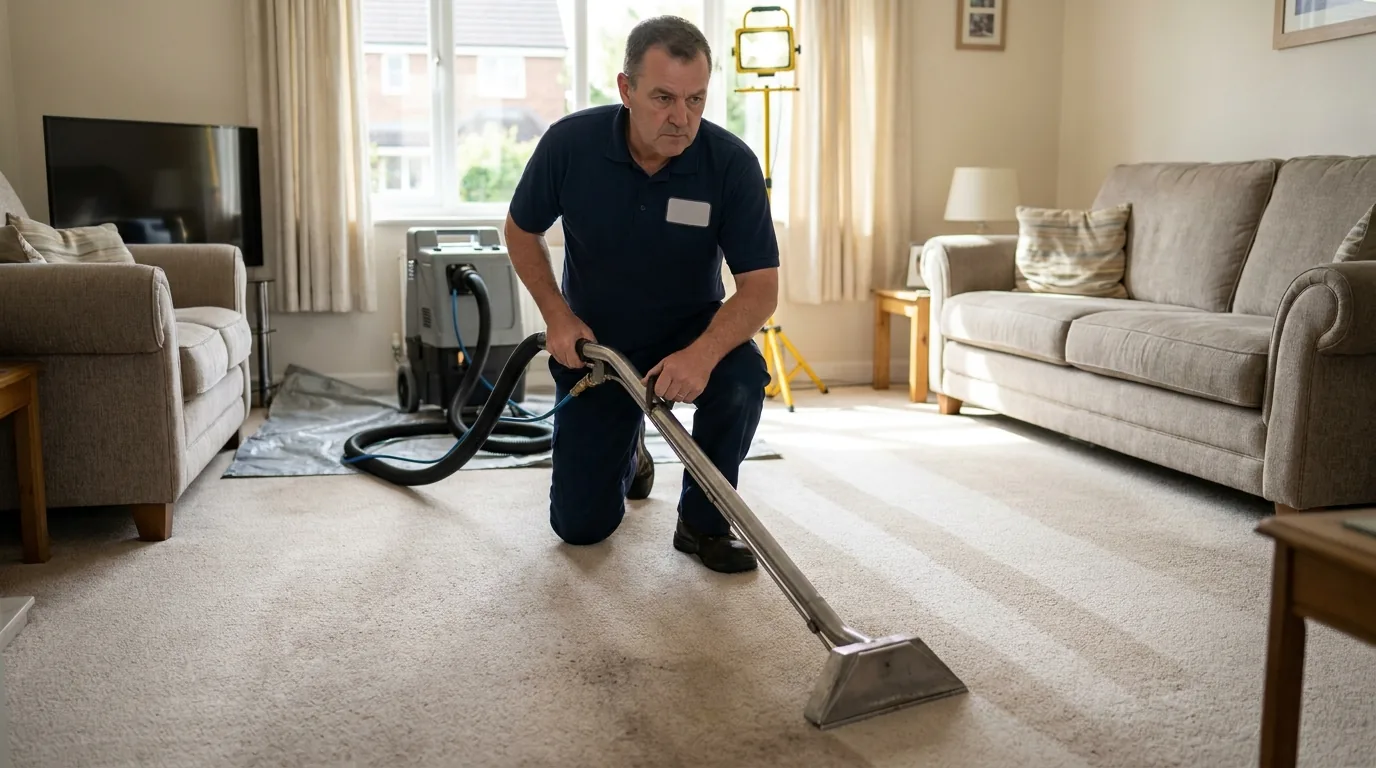
Carpet Cleaning in Saratoga Springs
24/7 carpet cleaning in Saratoga Springs and surrounding areas. IICRC-certified, insurance billing accepted. Call (801) 995-2437.
What carpet cleaning actually involves
That dingy, flattened path through your living room — the one that looks gray no matter how many times you run a vacuum over it — isn’t just surface dirt. Carpet fibers trap allergens, pet dander, fine grit from Utah’s sandy soil, and organic residue from spills that dried before they were fully blotted. Over time, that material works its way past the face fibers and into the backing. A rental machine from the hardware store agitates the top layer; it rarely reaches what’s causing the odor or the discoloration. Professional carpet cleaning extracts the contamination from the full depth of the pile — and does it without leaving the backing saturated long enough to grow mold.
The equipment difference is significant. Truck-mounted hot-water extraction units generate water temperatures above 200°F and vacuum pressure that portable machines can’t match. That heat breaks down the protein bonds in pet urine, loosens grease-based stains, and kills dust mites without chemical residue. For commercial carpet — the dense, low-pile kind in offices and retail spaces — rotary extraction heads cover square footage efficiently while maintaining consistent agitation across the surface. Drying time with professional equipment typically runs two to four hours; a soaked carpet from an underpowered machine can stay wet overnight and create the exact conditions you were trying to clean away.
Our process
1. Pre-inspection and fiber identification Not every carpet responds to the same chemistry. Wool, nylon, polyester, and olefin each have different pH tolerances and heat limits. Before any solution touches the floor, we identify the fiber type, note existing damage (fraying, delamination, color fading), and document stains by type — pet, food, oil-based, or unknown. This step protects you: it’s how we catch a bleach-damaged area before cleaning so you’re not blamed for something that was already there.
2. Dry soil removal and pre-treatment Vacuuming before wet extraction isn’t optional — it’s what prevents dry grit from turning into abrasive mud during the cleaning pass. We use commercial-grade HEPA-filtered vacuums, then apply targeted pre-treatment solutions to high-traffic lanes and identified stains. Enzyme-based pre-sprays go on pet urine spots; alkaline degreasers go on food and oil; protein-specific treatments go on blood or biological residue. Dwell time matters here — rushing this step is one of the most common mistakes in discount carpet cleaning.
3. Hot-water extraction The truck-mounted unit injects heated water and cleaning solution into the pile under pressure, then extracts it — along with the loosened soil — in the same pass. We work in overlapping strokes, adjusting water temperature and vacuum speed based on fiber type and soil load. Heavily soiled areas get a second pass. The goal is to remove as much moisture as possible during extraction so drying time stays short.
4. Stain treatment and spot work Some stains don’t release during the main extraction pass. Rust, red dye, and set-in pet urine often need secondary treatment — reducing agents for oxidized stains, specialized urine-neutralizing solutions for odor at the source. We address these after the main clean when the carpet is wet and fibers are open, which improves penetration. We’re direct about what won’t come out: permanent dye transfer and bleach damage are physical changes to the fiber, not soil, and no cleaning process reverses them.
5. Grooming and drying setup After extraction, we rake the pile with a carpet grooming brush to restore fiber direction and speed surface drying. In spaces where airflow is limited — finished basements, interior rooms without windows — we position air movers to bring drying time down. We don’t leave a wet carpet and walk out.
What separates a good carpet cleaning from a bad one
The most common failure point is over-wetting. When a machine applies more water than it can extract, the backing and pad stay saturated. In Utah’s climate, where homes are well-sealed against dry air in winter, a wet pad can begin supporting mold growth within 24 to 48 hours — the same timeline that applies after a water damage event. A properly extracted carpet should feel slightly damp to the touch, not wet.
The second failure is skipping pre-treatment dwell time to move faster. Pre-sprays need time to break down soil chemistry before extraction. A technician who applies solution and immediately extracts is essentially rinsing without cleaning.
For commercial carpet cleaning, the common miss is inadequate soil extraction in high-traffic lanes. Those areas carry compacted, layered contamination that requires slower machine passes and sometimes a second extraction. Rushing through them leaves a visible tide-line effect once the carpet dries.
For pet odor specifically, surface cleaning without treating the urine salts in the backing and pad will produce odor that returns as humidity rises — a common complaint after low-quality cleaning. Proper carpet sanitization reaches the source, not just the surface.
Seasonal and regional considerations
Saratoga Springs sits at roughly 4,500 feet elevation, and the valley’s soil is fine and alkaline — it tracks into carpet differently than coastal clay or humid-region mud. Spring and fall are the heaviest soiling seasons: spring thaw brings sandy runoff onto driveways and into entryways; fall brings the same cycle in reverse. Scheduling a deep carpet cleaning at the end of each season keeps abrasive grit from grinding down fiber tips over winter when windows stay closed and the same air recirculates.
Winter cleaning is entirely practical — homes are heated and carpets dry normally with interior air movers. Summer cleaning benefits from the ability to open windows and accelerate drying naturally.
Service area
Home Pride Restoration and Cleaning is based in Saratoga Springs and serves the surrounding Utah County and Salt Lake County communities, including Eagle Mountain, Lehi, American Fork, Highland, Cedar Hills, and Herriman. The city-specific pages for each area link back here for the full service description.
If you’re looking at your carpet and already know it needs more than a vacuum, call (801) 995-2437 to schedule a professional carpet cleaning — we’ll tell you exactly what’s realistic before we start.
Frequently Asked Questions
What's the difference between hot-water extraction and steam cleaning — and which does my carpet actually need?
How long will my carpet stay wet after professional cleaning, and what should I do during that time?
Can pet urine odor actually be eliminated, or does it just get masked?
Which carpet stains genuinely can't be removed, and why?
How often should high-traffic commercial carpet be professionally cleaned to maintain its warranty and appearance?

Need Carpet Cleaning now?
We respond 24/7 across Saratoga Springs and surrounding UT cities.
Call (801) 995-2437Related Coverage
- Our Restoration Services
- Contact Home Pride Restoration and Cleaning
- Carpet Cleaning in American Fork
- Carpet Cleaning in Eagle Mountain
- Carpet Cleaning in Herriman
- Carpet Cleaning in Lehi
- Carpet Cleaning in Orem
- Carpet Cleaning in Pleasant Grove
- Carpet Cleaning in Provo
- Carpet Cleaning in Riverton
- Carpet Cleaning in Saratoga Springs
- Carpet Cleaning in South Jordan