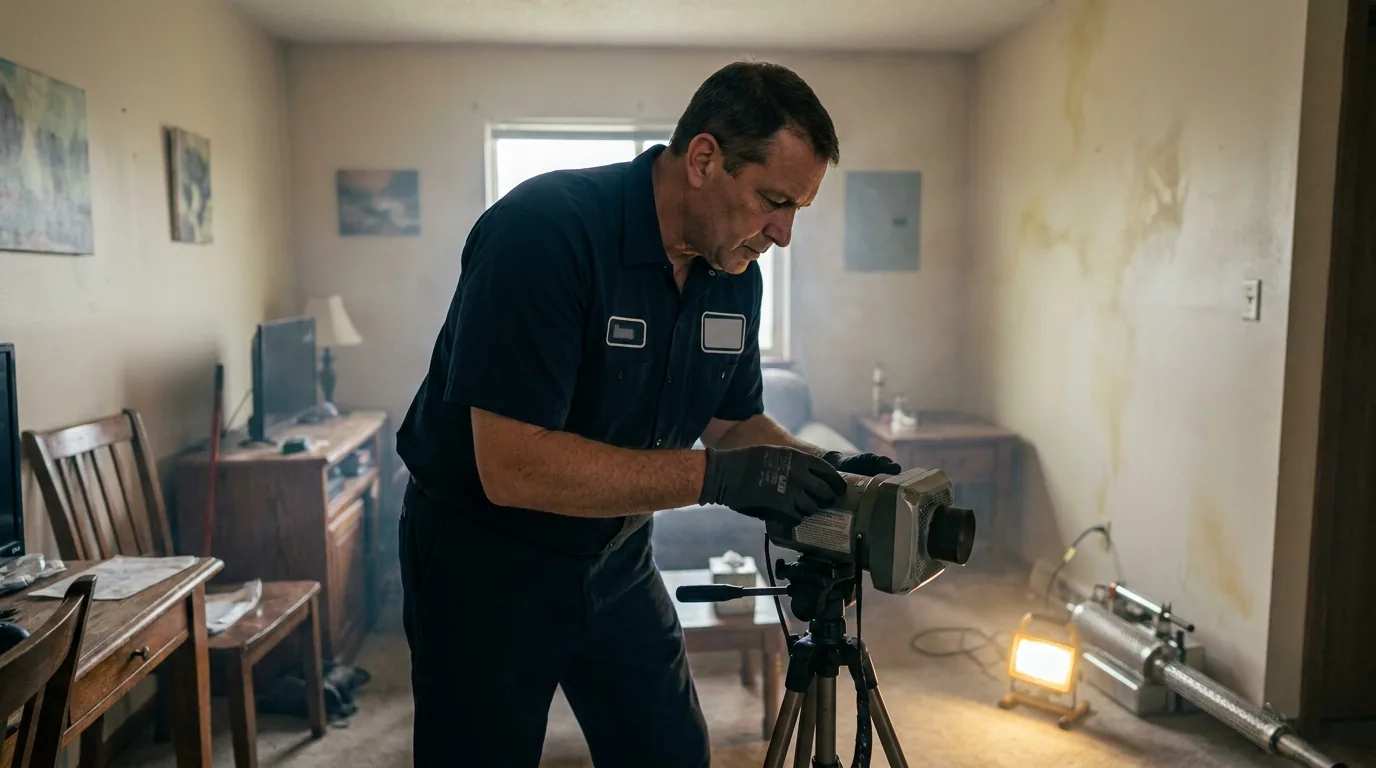
Odor Removal and Deodorization in Saratoga Springs
24/7 odor removal and deodorization in Saratoga Springs and surrounding areas. IICRC-certified, insurance billing accepted. Call (801) 995-2437.
That smell isn’t going away on its own. Whether it’s the sharp, acrid bite of smoke that’s soaked into drywall and insulation, the ammonia-heavy stench of pet urine that’s wicked into subfloor plywood, or the musty, earthy odor of mold that persists long after the visible growth is gone — surface cleaning and air fresheners don’t reach the source. Odor molecules bond to porous materials at a molecular level, and without the right equipment and chemistry, they off-gas for months. That’s the problem professional odor removal and deodorization actually solves.
What odor removal and deodorization actually involves
Professional deodorization isn’t a spray-and-walk-away service. It’s a systematic process of identifying where odor-causing compounds have penetrated, then applying the right technology to neutralize them — not mask them.
The equipment varies by odor source and severity. Ozone generators produce O₃, which oxidizes odor molecules on contact, penetrating soft goods, wall cavities, and HVAC ductwork. Because ozone at treatment concentrations is a respiratory irritant, the space must be vacated during treatment and ventilated before re-entry. Hydroxyl generators use UV light to produce hydroxyl radicals — a slower process, but one that can run while occupants remain in adjacent spaces, making it useful in occupied commercial buildings or multi-unit properties. Thermal fogging vaporizes a deodorizing solution into a fine fog that follows the same pathways smoke or odor-causing gases traveled, reaching inside wall cavities, behind baseboards, and into ceiling assemblies. For localized, embedded odors — pet urine in concrete, for example — enzymatic treatments break down the organic compounds that bacteria feed on, eliminating the biological source rather than covering it.
Timeline depends on severity. A single-room smoke odor from a contained kitchen fire may resolve in one to two treatment sessions over 24–48 hours. Whole-home smoke odor following a structural fire, or years of pet urine that has saturated subfloor and framing, may require multiple rounds of treatment, material removal, and sealing before odor levels are acceptable.
Our process
-
Source identification and odor mapping. Before any equipment is deployed, a technician walks the structure to locate every odor source — not just the obvious ones. This includes checking inside HVAC air handlers and ductwork, inside wall cavities near penetrations, beneath flooring, and inside attic spaces. Smoke and gases travel, and treating only the visible damage area is one of the most common reasons odor returns.
-
Material assessment — remove or treat. Some materials cannot be deodorized to an acceptable level and must be removed: heavily saturated drywall, carpet pad, insulation, or subfloor sections. Attempting to treat unsalvageable material wastes time and delays results. This step determines what stays and what goes before deodorization begins.
-
Mechanical cleaning of hard surfaces. Soot, smoke residue, and biological material on hard surfaces are cleaned before any fogging or ozone treatment. Applying ozone or hydroxyl to surfaces still coated in residue reduces effectiveness — the technology works on airborne and surface-bonded molecules, not on thick deposits.
-
Primary deodorization treatment. Depending on odor type and occupancy requirements, this is where ozone treatment, hydroxyl generation, or thermal fogging is deployed — often in combination. For smoke odor removal following fire damage, thermal fogging typically follows ozone treatment to reach areas the ozone cycle may not have fully penetrated.
-
Verification and sealing. After treatment, affected surfaces are checked for residual odor. Porous materials like concrete or OSB subfloor that have absorbed pet urine or smoke may be sealed with an odor-blocking primer to encapsulate any remaining compounds before new flooring or drywall is installed. A final walkthrough confirms odor levels are within acceptable range before the job is closed.
What separates a good deodorization response from a bad one
The most common failure in professional odor elimination is skipping source identification and going straight to treatment. Ozone and hydroxyl are powerful tools, but they don’t work through six inches of insulation or beneath a concrete slab. If the source isn’t reached, the odor returns — sometimes within days of the equipment being removed.
A second common mistake is treating salvageable and unsalvageable material the same way. Carpet pad that has absorbed cat urine for years is not a deodorization candidate; it’s a removal candidate. Experienced operators make that call early, which saves the homeowner money and prevents repeated callbacks.
For insurance claims involving smoke odor removal after a fire, adjusters look for documentation of the odor source, the treatment methods used, and the materials removed. Vague invoices that list “deodorization” as a line item without specifying equipment, dwell times, and square footage treated are frequently disputed. IICRC-certified technicians follow documented protocols that hold up to adjuster review.
Finally, ozone treatment requires strict re-entry protocols. High ozone concentrations are effective precisely because they’re reactive — which means improper use is a safety concern. Treatment windows, ventilation periods, and concentration levels should be documented on every job.
Seasonal and regional considerations
Saratoga Springs and the broader Utah Valley sit at roughly 4,500 feet elevation, which affects how quickly deodorization treatments off-gas and ventilate. Lower air pressure at altitude means ozone dissipates somewhat faster than at sea level, which can require adjusted dwell times to achieve the same molecular contact. Utah’s dry climate is an advantage in some respects — lower ambient humidity means porous materials don’t re-absorb moisture-carried odor compounds as readily as they would in a humid climate — but it also means smoke residue from wildfires (a recurring seasonal reality along the Wasatch Front) dries and bonds to surfaces quickly, making early treatment critical.
Wildfire smoke events in late summer and early fall regularly push fine particulate and odor compounds into homes through HVAC systems and gaps in the building envelope. Homes in Eagle Mountain, Lehi, and the west-facing hillside neighborhoods of Saratoga Springs are particularly exposed during east-wind events.
Service area
Home Pride Restoration and Cleaning is based in Saratoga Springs and provides odor removal and deodorization services throughout Utah County and the surrounding region, including Lehi, Eagle Mountain, American Fork, Pleasant Grove, Orem, Provo, and Draper. Dedicated service-area pages cover each city with local detail.
If you’re dealing with a persistent odor that hasn’t responded to cleaning — smoke, pet urine, mold, or anything else — call (801) 995-2437 to schedule an odor assessment. A technician will identify the source, explain which treatment approach fits your situation, and give you a clear picture of what the process looks like before any work begins.
Frequently Asked Questions
What's the difference between ozone treatment and hydroxyl deodorization, and how do I know which one my situation needs?
Why does smoke odor come back a few weeks after I thought it was gone?
Can pet urine odor in a concrete subfloor actually be eliminated, or does the concrete have to be replaced?
How long do I need to stay out of my home during ozone treatment, and what should I do with pets and plants?
Does homeowners insurance typically cover professional odor removal after a fire or smoke event?

Need Odor Removal and Deodorization now?
We respond 24/7 across Saratoga Springs and surrounding UT cities.
Call (801) 995-2437Related Coverage
- Our Restoration Services
- Contact Home Pride Restoration and Cleaning
- Odor Removal and Deodorization in American Fork
- Odor Removal and Deodorization in Eagle Mountain
- Odor Removal and Deodorization in Herriman
- Odor Removal and Deodorization in Lehi
- Odor Removal and Deodorization in Orem
- Odor Removal and Deodorization in Pleasant Grove
- Odor Removal and Deodorization in Provo
- Odor Removal and Deodorization in Riverton
- Odor Removal and Deodorization in Saratoga Springs
- Odor Removal and Deodorization in South Jordan